Free Models
 1:1000 FREE
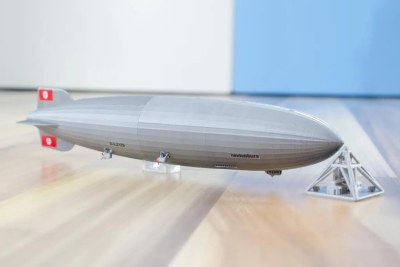
LZ-129 Hindenburg
LZ 129 Hindenburg (Luftschiff Zeppelin #129; registration: D-LZ 129) was a German commercial passenger-carrying rigid airship, the lead ship of its class, the longest class of flying machine and the largest airship by envelope volume.[It was designed and built by the Zeppelin Company (Luftschiffbau Zeppelin GmbH) on the shores of Lake Constance in Friedrichshafen, Germany, and was operated by the German Zeppelin Airline Company (Deutsche Zeppelin-Reederei). It was named after Field Marshal Paul von Hindenburg, who was President of Germany from 1925 until his death in 1934.
 1:1000 FREE
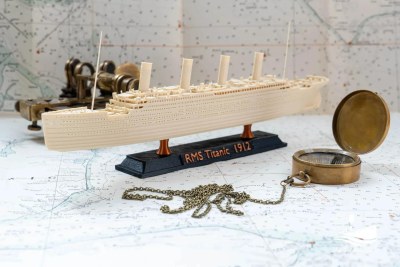
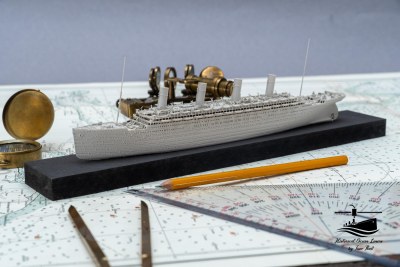
RMS Titanic
This model of the Titanic is one of the first models I ever built, making it a great starting point for anyone looking to get into the subject. Since it was one of my first models, it contains historical inaccuracies and the details are far from up to date, but it’s still a wonderful way to get a first impression.
1:1000
 1:1000 from Ocean Liner Captain
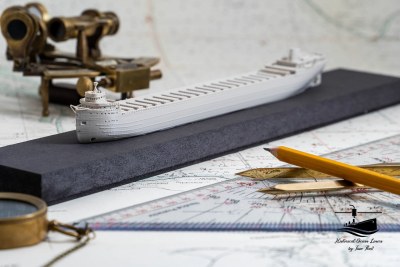
Edmund Fitzgerald
SS Edmund Fitzgerald was an American Great Lakes freighter that sank in Lake Superior during a storm on November 10, 1975, with the loss of the entire crew of 29 men. When launched on June 7, 1958, she was the largest ship on North America's Great Lakes and remains the largest to have sunk there. She was located in deep water on November 14, 1975, by a U.S. Navy aircraft detecting magnetic anomalies, and soon afterwards found to be in two large pieces.
 1:1000 from Ocean Liner Captain
HMT Olympic
The RMS Olympic was a White Star Line ocean liner, launched in 1910 as the lead ship of the Olympic-class trio, which also included her famous sisters Titanic and Britannic. She entered transatlantic service in 1911 and quickly earned a reputation for reliability and comfort, unlike her ill-fated sister. During the First World War, she was requisitioned as a troopship under the designation HMT Olympic, earning the nickname "Old Reliable" for her service transporting troops and even ramming and sinking a German U-boat in 1918. After the war, she returned to civilian service, undergoing refits to convert her from coal to oil power and continuing to operate the prestigious Southampton–New York route throughout the 1920s. Despite her popularity, the Great Depression and declining passenger numbers took their toll, and she was withdrawn from service in 1935. She was subsequently sold and scrapped, ending a long and largely successful career of nearly a quarter century in 1937.
 1:1000 from Ocean Liner Captain
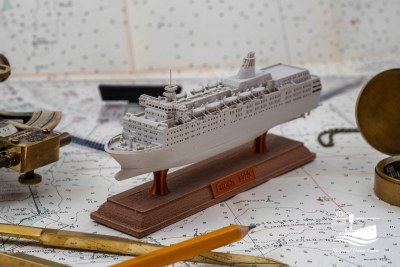
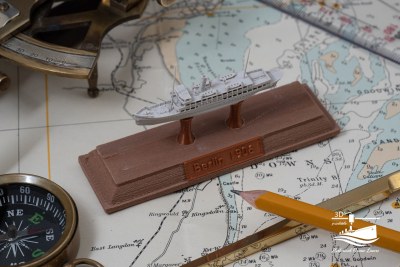
MS Estonia
MS Estonia was a car-passenger ferry built in 1980 for the Finnish shipping company Rederi Ab Sally by Meyer Werft, in Papenburg, West Germany. She was deployed on ferry routes between Finland and Sweden by various companies (first Viking Line, then EffJohn) until the end of January 1993, when she was sold to Nordström & Thulin for use on Estline's Tallinn–Stockholm route. The ship's sinking on 28 September 1994, in the Baltic Sea between Sweden, Finland and Estonia, was one of the deadliest peacetime maritime disasters of the 20th century, claiming 852 lives. An official inquiry found that failure of the locks on the bow visor allowed water to flood the car deck and quickly capsize the ship. The report also noted a lack of crew action. A 2023 investigation noted additional construction flaws in the bow visor
 1:1000 from Ocean Liner Captain
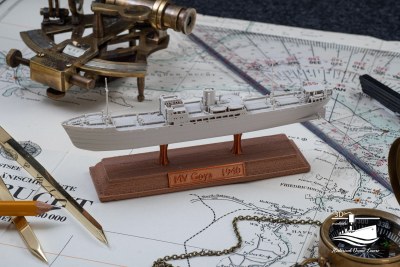
MV Goya
MV Goya was a Norwegian cargo ship built in 1940 for the Johan Ludwig Mowinckel Rederi and named after the Spanish painter Francisco Goya. After Germany invaded Norway in 1940, the vessel was seized by the Kriegsmarine and converted into a troop transport. In the final months of World War II, Goya participated in Operation Hannibal, evacuating German soldiers and civilians across the Baltic Sea as Soviet forces advanced. On 16 April 1945, while carrying thousands of refugees and military personnel, she was torpedoed and sunk by the Soviet submarine L-3. The ship sank within minutes, causing a catastrophic loss of life. Only 183 people survived from an estimated 6,700 passengers and crew, making the sinking of Goya one of the deadliest maritime disasters in history.
 1:1000 from Ocean Liner Captain
MV Wilhelm Gustloff
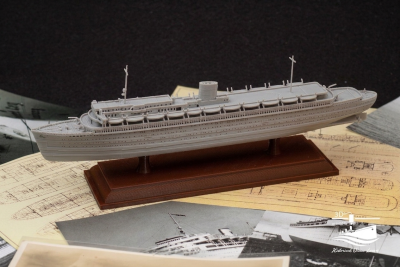
MV Wilhelm Gustloff was a German passenger ship built in 1937 for the Nazi Strength Through Joy (Kraft durch Freude) program. At the outbreak of World War II, she was requisitioned by the Kriegsmarine and initially served as a hospital ship before being used as a floating barracks. In January 1945, during Operation Hannibal, she was tasked with evacuating German civilians, wounded soldiers, and military personnel from East Prussia and the Baltic region as Soviet forces advanced. On 30 January 1945, the ship was torpedoed in the Baltic Sea by the Soviet submarine S-13 and sank within hours. An estimated 9,343 people lost their lives, making the sinking of Wilhelm Gustloff the deadliest maritime disaster in modern history. The tragedy remains one of the most significant and least-known disasters of World War II.
 1:1000 from Ocean Liner Captain
NS Savannah
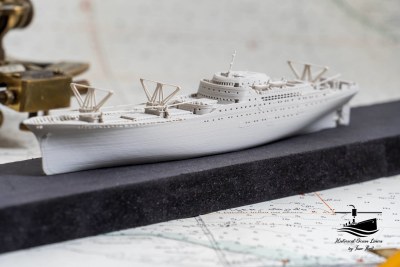
Launched on July 21, 1959, NS Savannah was the world's first nuclear-powered merchant ship. Funded by US agencies under President Eisenhower's "Atoms for Peace" program, the $46.9 million demonstration project aimed to showcase peacetime nuclear energy. Named after the first transatlantic steamship, Savannah received the new prefix "NS" (Nuclear Ship). It operated from 1962 to 1972 as one of only four nuclear-powered cargo ships ever built, following the 1957 Soviet icebreaker Lenin, the first civilian nuclear vessel. Deactivated in 1971, Savannah underwent several moves before being permanently moored at Pier 13 of the Canton Marine Terminal in Baltimore, Maryland, in 2008.
 1:1000 from Ocean Liner Captain
RMS Adriatic II
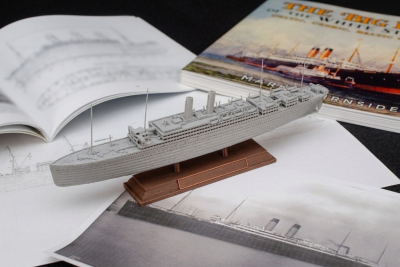
RMS Adriatic was a British ocean liner of the White Star Line and the fourth member of the famous “Big Four” class. Entering service in 1907, she was the largest, fastest, and most luxurious of her sister ships, featuring innovations such as an indoor swimming pool and Victorian-style Turkish baths. Initially operating between Southampton and New York, she later served on the Liverpool–New York route, offering comfortable transatlantic travel at moderate fares. During World War I, Adriatic continued civilian service before being requisitioned as a troop transport in 1917. After the war, she underwent several refits and increasingly focused on cruising. Following the merger of the Cunard Line and White Star Line in 1934, Adriatic was considered surplus to requirements, withdrawn from service, and scrapped in 1935.
 1:1000 from Ocean Liner Captain
RMS Aquitania
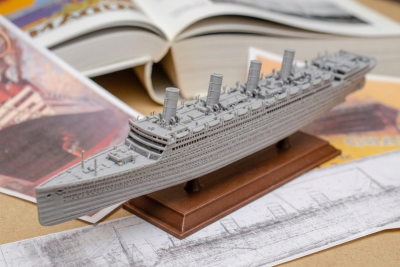
RMS Aquitania was a British ocean liner operated by the Cunard Line from 1914 to 1950. The third of Cunard’s famous express liners, alongside Lusitania and Mauretania, she was renowned for her elegant interiors and earned the nickname “The Ship Beautiful.” Shortly after entering service, World War I began, and Aquitania served as an auxiliary cruiser, troop transport, and hospital ship. Returning to passenger service in 1920, she became one of the most popular liners on the Atlantic route. After the Cunard–White Star merger in 1934, she remained in service and again served as a troopship during World War II, transporting thousands of Allied soldiers. Following the war, she carried migrants to Canada before being retired in 1949 and scrapped in 1950. Aquitania was the last surviving four-funnel ocean liner and one of the most celebrated ships of her era.
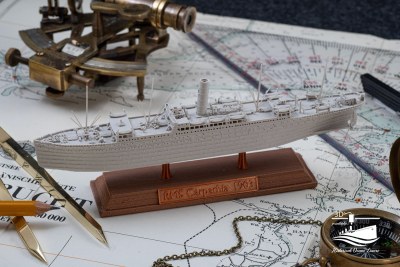 1:1000 from Ocean Liner Captain
RMS Carpathia
RMS Carpathia was a Cunard Line transatlantic passenger steamship built by C. S. Swan & Hunter in their shipyard in Wallsend, England. Carpathia made her maiden voyage in 1903 from Liverpool to Boston, and continued on this route before being transferred to Mediterranean service in 1904. In April 1912, she became famous for rescuing survivors of the rival White Star Line's RMS Titanic after it struck an iceberg and sank in the North Atlantic Ocean. Carpathia navigated the ice fields to arrive two hours after Titanic had sunk, and the crew rescued 712 survivors from the ship's lifeboats.
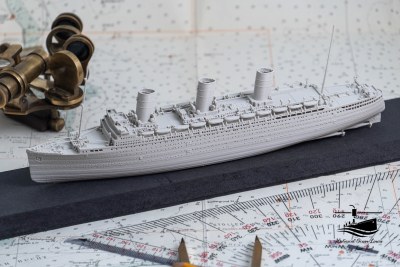 1:1000 from Ocean Liner Captain
RMS Empress of Britain
RMS Empress of Britain was a steam turbine ocean liner built between 1928 and 1931 at the John Brown & Company shipyard in Scotland, owned by the Canadian Pacific Railway Company and operated by Canadian Pacific Steamship Company. She was the second of three Canadian Pacific ships named Empress of Britain,[1] which provided scheduled trans-Atlantic passenger service from spring to autumn between Canada and Europe from 1931 until 1939.
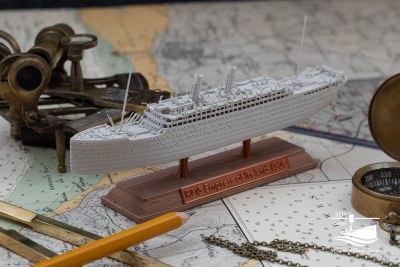 1:1000 from Ocean Liner Captain
RMS Empress of Ireland
RMS Empress of Ireland was a British-built ocean liner that sank near the mouth of the Saint Lawrence River in Canada following a collision in thick fog with the Norwegian collier Storstad in the early hours of 29 May 1914, en route to Liverpool. Although the ship was equipped with watertight compartments and, in the aftermath of the Titanic disaster two years earlier, carried more than enough lifeboats for all aboard, she foundered in only 14 minutes. Of the 1,477 people on board, 1,012 died, making it the worst peacetime maritime disaster in Canadian history.
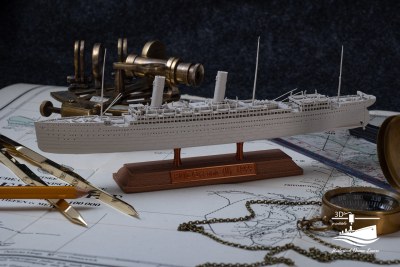 1:1000 from Ocean Liner Captain
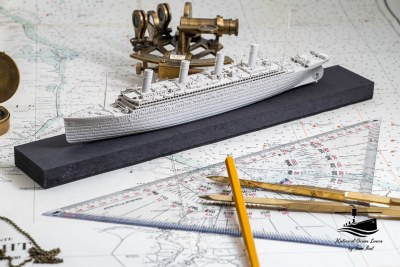
RMS Oceanic II
RMS Oceanic was a transatlantic ocean liner built for the White Star Line. She sailed on her maiden voyage on 6 September 1899 and was the largest ship in the world until 1901.[1] At the outbreak of World War I she was converted into an armed merchant cruiser. On 8 August 1914 she was commissioned into Royal Navy service. On 25 August 1914, the newly designated HMS Oceanic departed Southampton to patrol the waters from the North Scottish mainland to Faroe. On 8 September she ran aground and was wrecked off the island of Foula, in the Shetland Islands.
 1:1000 from Ocean Liner Captain
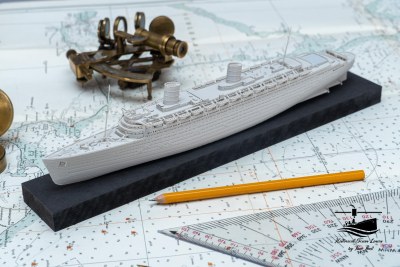
RMS Olympic
RMS Olympic was a British ocean liner and the first of the White Star Line’s Olympic-class ships. Unlike her sister ships, RMS Titanic and HMHS Britannic, she enjoyed a long career from 1911 to 1935. During World War I she served as the troopship HMT Olympic, earning the nickname “Old Reliable” and sinking the German submarine U-103 by ramming it. After the war she returned to passenger service and operated successfully through the 1920s. Economic decline during the Great Depression reduced profitability, leading to her retirement in 1935 and scrapping by 1939.
 1:1000 from Ocean Liner Captain
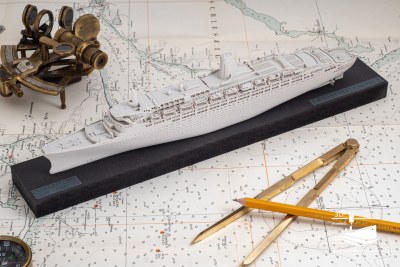
RMS Queen Elizabeth
The RMS Queen Elizabeth was a Cunard Line ocean liner, launched on the River Clyde in Scotland in 1938 and named after the wife of King George VI. At the time, she was the largest passenger ship ever built, a title she held for decades. Due to the outbreak of the Second World War, she was secretly commissioned and initially used as a troopship rather than a passenger vessel, carrying Allied soldiers across the Atlantic throughout the war. After extensive refitting, she finally entered commercial transatlantic service in 1946, operating alongside her running mate, the RMS Queen Mary, on the prestigious Southampton–New York route for Cunard. Together, the two ships dominated luxury ocean travel for over two decades. As jet air travel grew popular, demand declined, and she was retired from service in 1968. She was later sold and eventually caught fire and sank in Hong Kong Harbour in 1972 while being converted into a floating university.
 1:1000 from Ocean Liner Captain
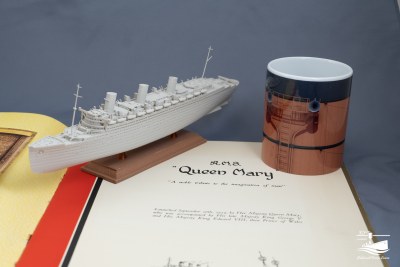
RMS Queen Elizabeth 2
Queen Elizabeth 2 (QE2) was a British ocean liner and cruise ship operated by the Cunard Line. Launched in 1967 and entering service in 1969, she was designed for both transatlantic crossings and worldwide cruising. QE2 became one of the most famous passenger ships of the 20th century and served as Cunard’s flagship for nearly 40 years. In 1982 she was requisitioned as a troopship during the Falklands War. Between 1986 and 1987 she underwent a major refit, including conversion from steam to diesel power. She continued operating as a cruise and ocean liner until being replaced on the transatlantic route by Queen Mary 2 in 2004. QE2 made her final voyage in 2008 and was retired in Dubai, where she was converted into a floating hotel.
 1:1000 from Ocean Liner Captain
RMS Queen Mary
RMS Queen Mary was a British ocean liner operated by the Cunard Line from 1936 to 1967. Built as one of Cunard’s famous “Queens,” she quickly gained renown for her speed, luxury, and transatlantic service between Southampton and New York. She won the prestigious Blue Riband for the fastest Atlantic crossing and became one of the most celebrated liners of her era. During World War II, Queen Mary was converted into a troopship and transported Allied forces worldwide, including a record voyage carrying more than 16,600 people. After the war, she returned to passenger service alongside Queen Elizabeth, dominating Atlantic travel until the rise of jet airliners. Retired in 1967, she was permanently moored in Long Beach, California, where she remains today as a hotel, museum, and historic landmark.
 1:1000 from Ocean Liner Captain
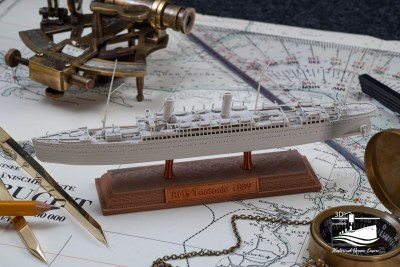
RMS Teutonic
RMS Teutonic was an ocean liner built for the White Star Line in Belfast, which entered service in 1889. She was the sister ship of RMS Majestic. Teutonic and her sister were the flagships of White Star Line's fleet for around a decade, until Oceanic entered service in 1899. She had a lengthy career of 32 years, which included war service during World War I, until being scrapped in 1921. Teutonic was historically notable for three reasons: for being the first armed merchant cruiser; for being the inspiration behind Germany's Kaiser-class ocean liners; and for being the last White Star ship to hold the Blue Riband.
 1:1000 from Ocean Liner Captain
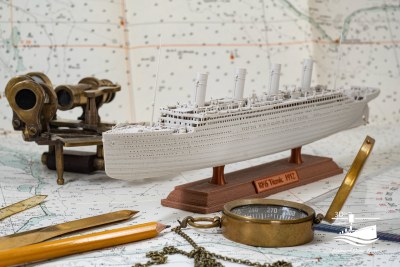
RMS Titanic
RMS Titanic was a British ocean liner operated by the White Star Line. On her maiden voyage from Southampton to New York, she struck an iceberg late on 14 April 1912 and sank in the early hours of 15 April. Of the 2,208 passengers and crew on board, about 1,500 lost their lives, making it one of the deadliest peacetime maritime disasters in history. At the time, Titanic was the largest ship afloat and was celebrated for her luxury, advanced engineering, and safety features, including watertight compartments. However, she carried lifeboats for only about half of those on board. The tragedy led to major reforms in international maritime safety regulations and remains one of the most famous shipwrecks ever, leaving a lasting impact on popular culture.
 1:1000 from Ocean Liner Captain
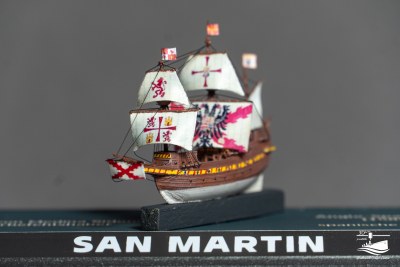
Saint Martin
The *San Martín* was an early modern Spanish sailing warship that served as the flagship for Alonso Pérez de Guzmán, Duke of Medina-Sidonia, when he led the Spanish Armada against the English fleet of Queen Elizabeth I in 1588.
 1:1000 from Ocean Liner Captain
Saloon steamer Berlin
Initially used for seaside resort services between Stettin and Swinemünde, the steamer Berlin suffered a steering failure on July 24, 1914, near the Oder's mouth. Traveling at full speed, it rammed and split the oncoming tugboat Ostsee, which was towing the Swedish freighter Porjus. A subsequent collision with the freighter caused the Berlin to sink bow-first into the shallow waters, leaving its upper decks above water. After WWI, the small steamer was repaired and returned to its original route. In 1935, it was acquired by J.F. Braeunlich. Requisitioned by the Kriegsmarine in WWII but returned in 1940, it maintained limited local service before assisting in East Prussian refugee evacuations during the war's final weeks. Post-war, the ship was ceded to the USSR, operating in the Black Sea as the Pestel until around 1960.
 1:1000 from Ocean Liner Captain
SS Andrea Doria
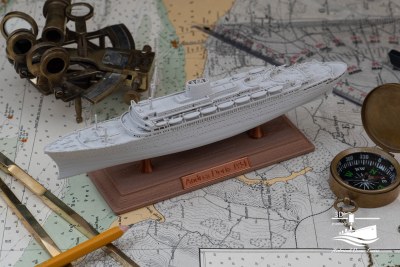
SS Andrea Doria was a luxury Italian transatlantic ocean liner of the Italian Line, entering service in 1953. Named after the 16th-century Genoese admiral Andrea Doria, she was considered Italy’s largest, fastest, and safest passenger ship of her time, with a gross tonnage of 29,100. She became famous after colliding with the Swedish liner Stockholm in dense fog off Nantucket, Massachusetts, on 25 July 1956. The collision tore a large hole in her starboard side, causing a severe list and flooding. Thanks to the calm actions of the crew and a highly successful rescue operation, 1,660 of the 1,706 passengers and crew survived, while 46 people lost their lives. The Andrea Doria remained afloat for over 11 hours before capsizing and sinking on 26 July 1956, becoming one of the most famous maritime disasters of the postwar era.
 1:1000 from Ocean Liner Captain
SS Arthur M. Anderson
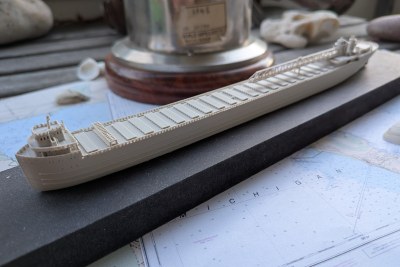
SS Arthur M. Anderson is an American lake freighter. She is famous for being the last ship to be in contact with SS Edmund Fitzgerald before she sank on November 10, 1975. Arthur M. Anderson was also the first rescue ship on the scene in a vain search for Edmund Fitzgerald's survivors. The vessel's namesake, Arthur Marvin Anderson, was director of U.S. Steel, a member of its finance committee and vice chairman of J.P. Morgan & Co. at the time. The ship was launched in 1952 and is currently laid-up in Toledo, Ohio.
 1:1000 from Ocean Liner Captain
SS Bremen
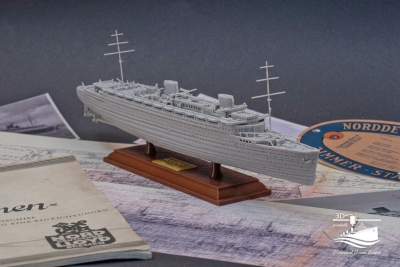
SS Bremen was a German-built ocean liner constructed for the German shipping company Norddeutscher Lloyd (NDL) to work the transatlantic sea route. Launched in 1928, Bremen was notable for her high-speed engines and low, streamlined profile. At the time of her construction, she and her sister ship Europa were the two most advanced high-speed steam turbine ocean liners of their day. The German pair sparked an international competition in the building of large, fast, luxurious ocean liners that were national symbols and points of prestige during the pre-war years of the 1930s. She held the Blue Riband, and was the fourth ship of NDL to carry the name Bremen.
 1:1000 from Ocean Liner Captain
SS Californian
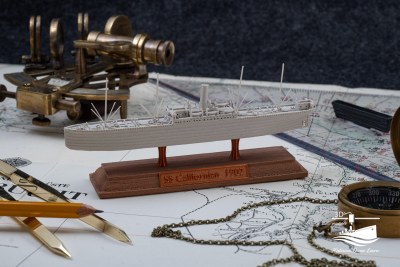
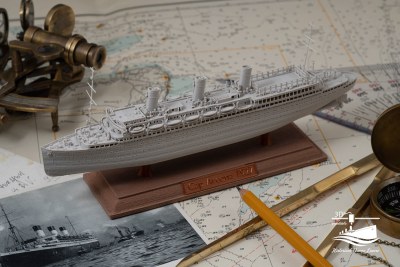
SS Californian was a British steamship operated by the Leyland Line. She is best known for her controversial role in the Titanic disaster of 1912, as she is believed to have been the nearest ship to Titanic when it struck an iceberg and sank. Although her crew observed distress rockets, no rescue attempt was made at the time. Subsequent American and British investigations concluded that a faster response might have saved many lives and strongly criticized Captain Stanley Lord for his inaction. Lord spent the rest of his life disputing these findings. A later review in 1992 concluded that, while Californian should have responded, it is unlikely that any action could have significantly changed the outcome beyond rescuing survivors already in lifeboats. During World War I, Californian served as a transport ship and was sunk in the Mediterranean in 1915 after attacks by German submarines.
 1:1000 from Ocean Liner Captain
SS Cap Arcona
SS Cap Arcona was a German ocean liner operated by the Hamburg Südamerikanische Dampfschifffahrts-Gesellschaft (Hamburg Süd). Launched in 1927, she served on the route between Germany and South America and was briefly the largest and fastest ship on that service. During World War II, the vessel was requisitioned by the Kriegsmarine and used as an accommodation ship. In 1942, she was employed as a floating set for the German propaganda film Titanic. In early 1945, Cap Arcona helped evacuate thousands of German refugees from East Prussia. Her final role was as a prison ship holding concentration camp prisoners. On 3 May 1945, she was attacked and sunk by Royal Air Force aircraft in the Baltic Sea, causing the deaths of about 5,000 people and making it one of the deadliest maritime disasters of World War II.
 1:1000 from Ocean Liner Captain
SS City of New York
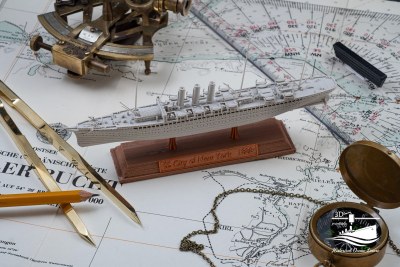
City of New York was a British-built passenger liner of the Inman Line, entering service in 1888 as one of the most advanced Atlantic liners of her era. Together with her sister ship City of Paris, she was among the first twin-screw express liners and was renowned for her speed and elegant design. In 1892, she captured the eastbound Atlantic speed record, achieving an average speed of 20.11 knots. Following the merger of the Inman Line into the American Line in 1893, the ship was renamed New York and transferred to the U.S. flag. She later served as USS Harvard during the Spanish–American War and as Plattsburg in World War I. The vessel is also remembered for narrowly avoiding a collision with RMS Titanic as the famous liner departed Southampton on her maiden voyage in 1912. She was scrapped in 1923.
 1:1000 from Ocean Liner Captain
SS Frankfurt
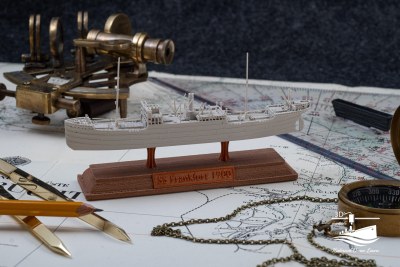
The Frankfurt was a German steamship of the Köln class, built by Joh. C. Tecklenborg for the Norddeutscher Lloyd. Launched on 17 December 1899, she operated on routes between Germany and the United States from 1900 to 1918, carrying many emigrants. In 1919, the vessel was acquired by the White Star Line. Three years later, she was sold to the Oriental Navigation Company in British Hong Kong and renamed Sarvistan. The ship is best known for its involvement in the wireless communications surrounding the sinking of the RMS Titanic in 1912.
 1:1000 from Ocean Liner Captain
SS General von Steuben
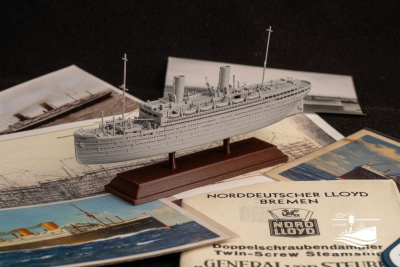
SS General von Steuben was a German passenger liner and later an armed transport ship of the German Navy that was sunk in the Baltic Sea during World War II. She was launched in 1923 as München (after the German city, sometimes spelled Muenchen), renamed General von Steuben in 1930 (after the famous German officer of the American Revolutionary War), and renamed Steuben in 1938. During World War II, the ship served as a troop accommodation vessel, and from 1944 as an armed transport. On 10 February 1945, while evacuating German military personnel, wounded soldiers, and civilian refugees during Operation Hannibal, the ship was torpedoed by the Soviet submarine S-13 and sank. An estimated 4,000 people lost their lives in the sinking.
 1:1000 from Ocean Liner Captain
SS Great Eastern
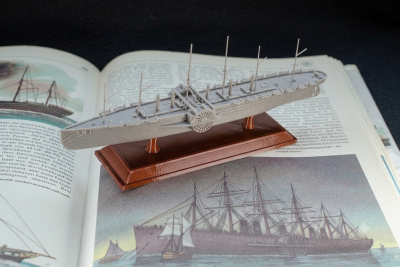
SS Great Eastern was a revolutionary British steamship designed by Isambard Kingdom Brunel and launched in 1858. Built with an iron hull and powered by both paddle wheels and a screw propeller, she was by far the largest ship ever constructed at the time. Designed to carry up to 4,000 passengers on long-distance voyages without refuelling, Great Eastern was decades ahead of her era in size and engineering. Although her passenger service between Britain and North America was commercially unsuccessful, she later found fame as a cable-laying ship. In 1866, she successfully laid the first durable transatlantic telegraph cable, helping to transform global communications. After her maritime career ended, she served as a floating exhibition and advertising platform in Liverpool before being scrapped in 1889.
 1:1000 from Ocean Liner Captain
SS Kaiser Wilhelm der Grosse
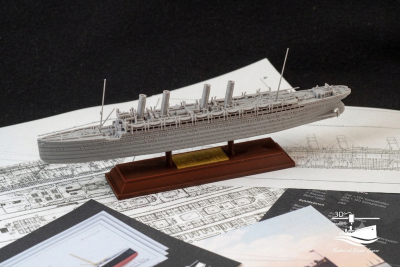
Kaiser Wilhelm der Grosse was a German transatlantic ocean liner operated by Norddeutscher Lloyd from 1897 to 1914. As the first major four-funnel liner, she is often regarded as the world’s first “superliner.” For a time, she was the largest ship afloat and won the prestigious Blue Riband for the fastest Atlantic crossing, helping Germany challenge British dominance at sea. The ship symbolized a new era of luxury, speed, and prestige in ocean travel. After the introduction of newer sister ships, she was increasingly used to carry emigrants to the United States. At the outbreak of World War I, Kaiser Wilhelm der Grosse was converted into an auxiliary cruiser and raided Allied shipping. In August 1914, she was defeated by the British cruiser HMS Highflyer near West Africa and scuttled by her crew, ending her career after just three weeks of wartime service.
 1:1000 from Ocean Liner Captain
SS New York
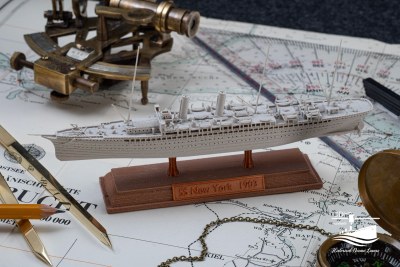
City of New York was a British-built passenger liner of the Inman Line, entering service in 1888 as one of the most advanced Atlantic liners of her era. Together with her sister ship City of Paris, she was among the first twin-screw express liners and was renowned for her speed and elegant design. In 1892, she captured the eastbound Atlantic speed record, achieving an average speed of 20.11 knots. Following the merger of the Inman Line into the American Line in 1893, the ship was renamed New York and transferred to the U.S. flag. She later served as USS Harvard during the Spanish–American War and as Plattsburg in World War I. The vessel is also remembered for narrowly avoiding a collision with RMS Titanic as the famous liner departed Southampton on her maiden voyage in 1912. She was scrapped in 1923.
 1:1000 from Ocean Liner Captain
SS Nieuw Amsterdam
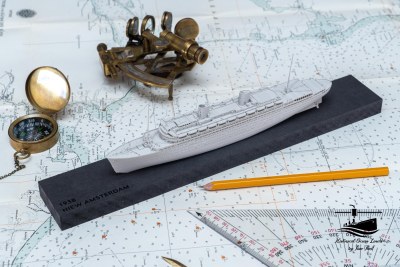
The SS Nieuw Amsterdam was a Dutch ocean liner built for the Holland America Line, launched in 1937 and entering service in 1938. She was designed as the flagship of the fleet and became renowned for her elegant Art Deco interiors, earning the nickname "Ship of a Thousand Elegances." With the outbreak of the Second World War, she was requisitioned as a troopship, transporting hundreds of thousands of Allied soldiers across the globe and covering vast distances during the conflict without ever being seriously damaged, despite several close calls with enemy forces. After the war, she returned to civilian transatlantic service, becoming one of the most beloved and successful liners of her era, known for comfort and reliability. She served for decades, remaining popular into the 1960s and early 1970s, before eventually being retired and scrapped in 1974, closing out an illustrious career spanning nearly forty years.
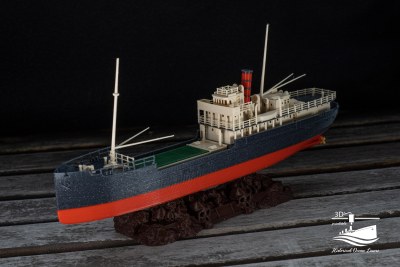
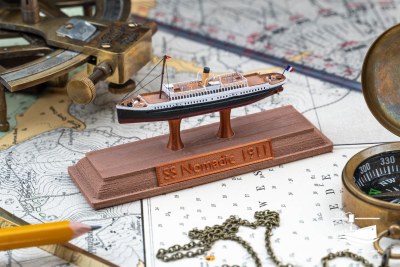 1:1000 from Mega Liner Captain
SS Nomadic
SS Nomadic is a former tender of the White Star Line, launched on 25 April 1911 at Belfast, that is now on display in Belfast's Titanic Quarter. She was built to transfer passengers and mail to and from the ocean liners RMS Olympic and RMS Titanic. She is the only surviving vessel designed by Thomas Andrews, who also helped design those two ocean liners, and the last White Star Line vessel in existence today.
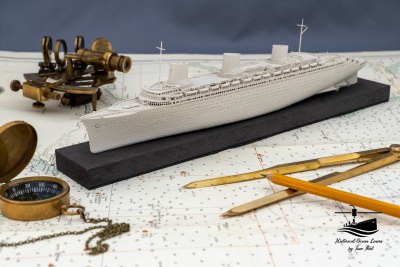 1:1000 from Ocean Liner Captain
SS Normandie
SS Normandie was a French ocean liner operated by the Compagnie Générale Transatlantique (French Line). Entering service in 1935, she was the largest and fastest passenger ship in the world and set a transatlantic speed record of 4.14 days, earning the prestigious Blue Riband. Renowned for her innovative design, luxurious interiors, and powerful turbo-electric propulsion system, Normandie became the flagship of the French Line and completed 139 transatlantic voyages between Le Havre and New York. Her main rival was RMS Queen Mary. During World War II, she was seized by U.S. authorities and renamed USS Lafayette. While being converted into a troopship in 1942, she caught fire and capsized in New York Harbor. Although later salvaged, restoration proved uneconomical, and she was scrapped in 1946.
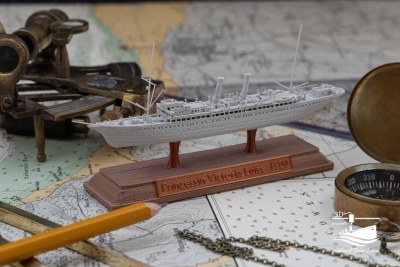 1:1000 from Ocean Liner Captain
SS Prinzessin Victoria Luise
The Princess Victoria Luise of the Hamburg-Amerikanische Packetfahrt-Actien-Gesellschaft (HAPAG) is considered the world's first ship built specifically as a cruise ship.[1][2] Completed by Blohm & Voss in December 1900, the ship was lost off the coast of Jamaica on December 16, 1906, due to a navigational error.
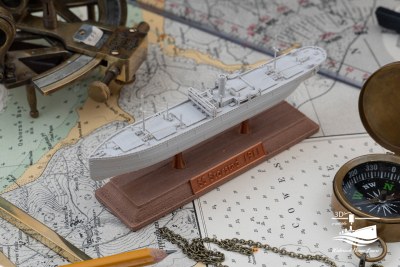 1:1000 from Ocean Liner Captain
SS Storstad
Storstad was a steam cargo ship built in 1910 by Armstrong, Whitworth & Co Ltd of Newcastle for A. F. Klaveness & Co of Sandefjord, Norway. The ship was primarily employed as an ore and coal carrier doing tramp trade during her career. In May 1914 she accidentally rammed and sank the ocean liner RMS Empress of Ireland, killing over 1,000 people. During the First World War, Storstad was torpedoed and sunk by the German submarine U-62.
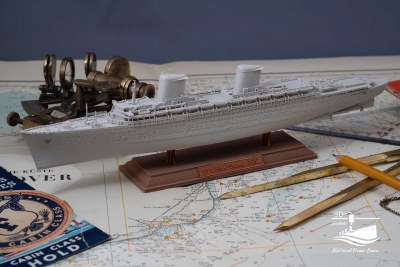 1:1000 from Ocean Liner Captain
SS United States
The United States is a former American passenger ship and remains the holder of the Blue Riband as the fastest steamship on the transatlantic route. She was operated as a liner by the United States Lines for regular service from New York to Europe on the Atlantic route. It is also known by the prefix SS, as SS United States; here, SS stands for the English term “Steam Ship,” referring to the use of steam turbines in its propulsion system.
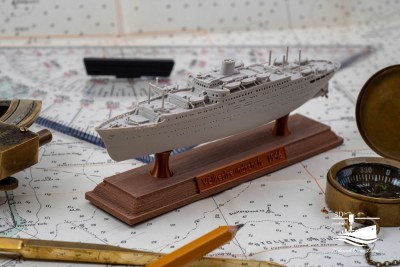 1:1000 from Ocean Liner Captain
Völkerfreundschaft
The passenger ship Stockholm was the world's longest-serving cruise ship.[1] It was built in 1946 at the Götaverken shipyard in Gothenburg, Sweden, as a transatlantic liner. The ship had eleven names over the course of its career, most recently Astoria since 2016. It became famous primarily for its collision with the Andrea Doria in 1956 and in the GDR as the FDGB vacation ship Völkerfreundschaft (1960–1985). The ship had been out of service since 2020. In 2025, it was sold to a shipbreaking yard in Ghent, Belgium; scrapping and recycling were underway there in the spring of 2026.